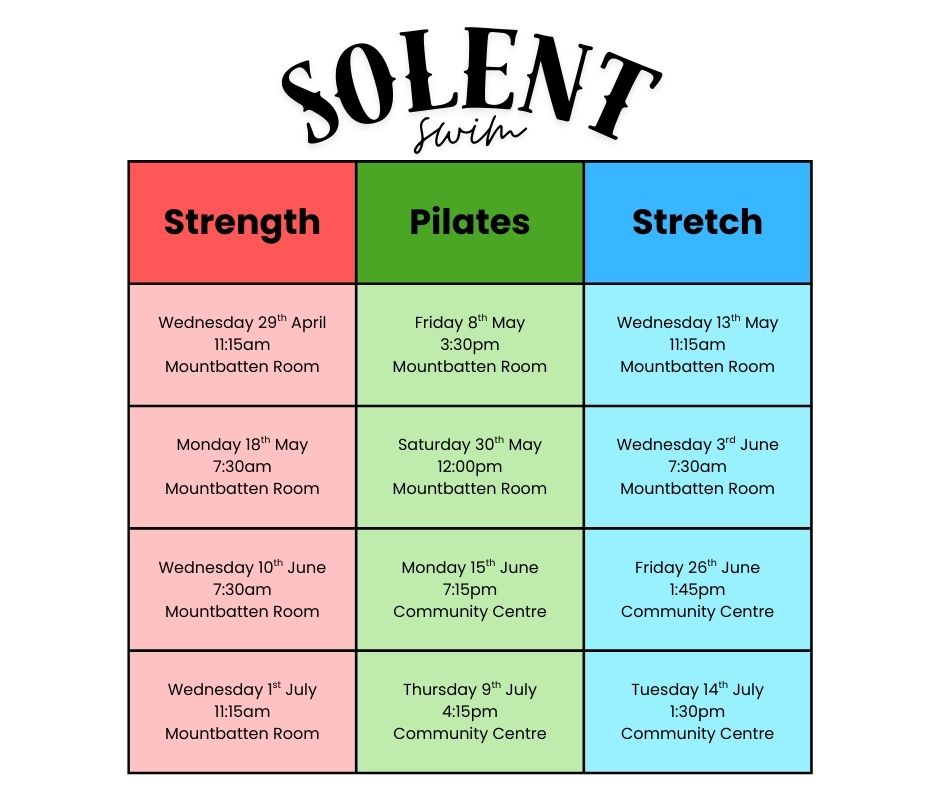

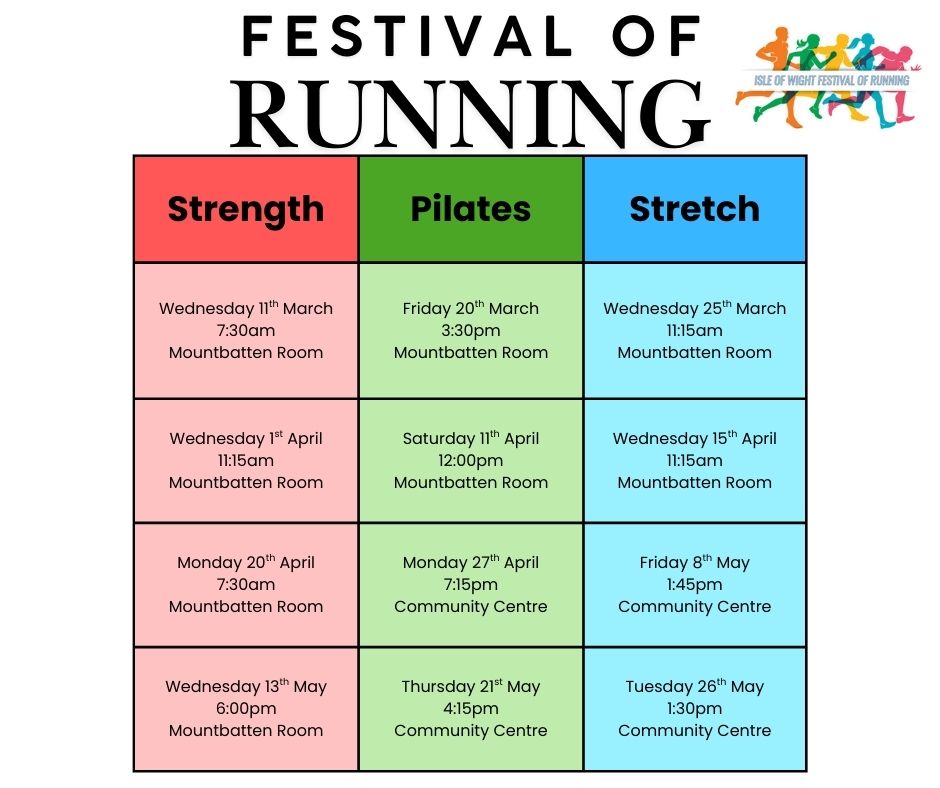
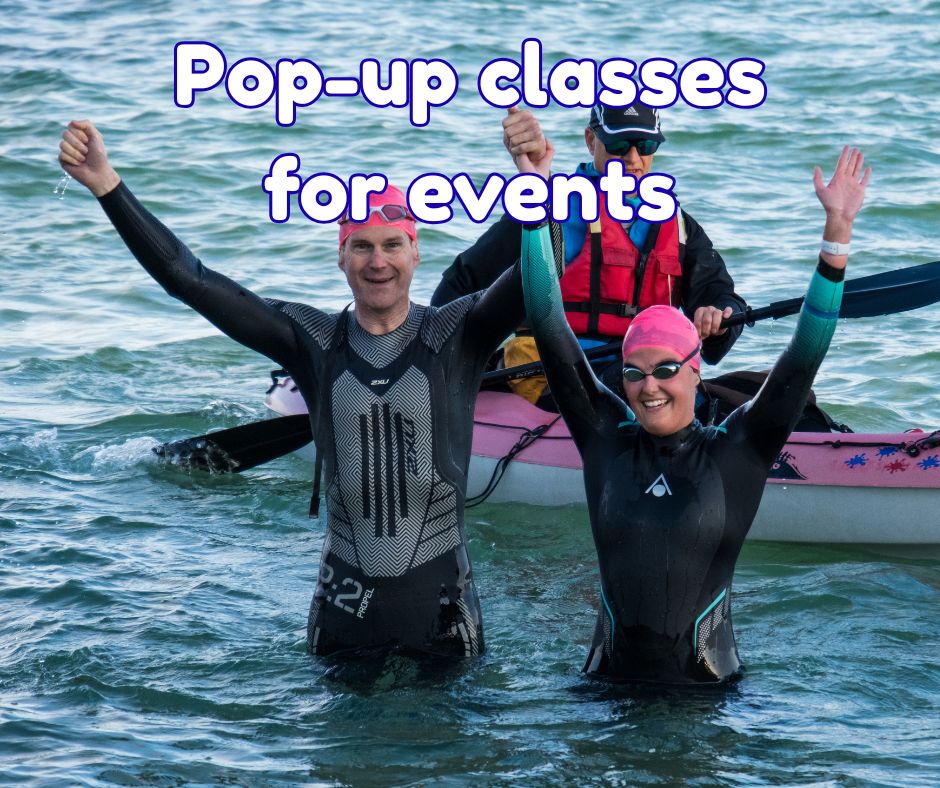
Pop-up classes for events is new for 2026 with the main aim of supporting people training for events. Two of our main events of the year are Solent Swim and Festival of Running so our sessions will be aimed at runners and swimmers. The classes will alternate between strength, Pilates and stretch class specifically planned to benefit running or swimming.
The classes run weekly starting on Wednesday 11th March at 7:30am with a strength class. Days and times of classes will change weekly to give as many people as possible the opportunity to attend.
Bookings can be made up to 9 days in advance st reception, by calling 752168 or online. Each sessions costs £7.15, not included in our memberships.
Benefits for Runners
Strength training is vital for runners to enhance performance, prevent injuries, and improve overall running efficiency.
Key benefits include:
- Enhanced core stability, essential for maintaining proper running form – leads to better posture and reduced risk of injury
- Improved running economy through enhanced neuromuscular coordination
- Strengthened muscles, tendons, and ligaments, which can reduce the risk of overuse injuries common among runners
- Improved bone density, reducing the risk of injury
- Better recovery, allowing for more frequent and longer training sessions without excessive fatigue.
Stretching helps runners maintain mobility, improve movement efficiency, and reduce the risk of injury.
Key benefits include:
- Improved hip, hamstring, and calf flexibility to increase stride efficiency
- Address muscle imbalances caused by repetitive running patterns
- Enhanced joint range of motion to support better running mechanics
- Reduced post-run muscle tightness and aid recovery
- Develop body awareness to recognise and manage areas of restriction early.

Pilates can be a great complement to running because it targets areas runners often neglect while directly supporting better performance and injury prevention.
Key benefits include:
- Improved core strength and stability by building deep core muscles – transverse abdominis, pelvic floor, multifidus
- Better hip and glute activation – reducing dependence on quads
- Enhanced running economy – improving balance, stability, and alignment
- Increased flexibility and mobility through all planes of movement
- Injury prevention by addressing imbalances and weaknesses
- Better breathing mechanics as Pilates teaches deep thoracic breathing
- Improved body awareness – developing proprioception and control
- Faster recovery – low impact, controlled exercise promotes circulation, reduces post-run stiffness, and supports active recovery days.
Benefits for Swimmers
Strength training plays a critical role in enhancing performance in the water. Through targeted exercises, speed, endurance and technique in the water can be enhanced.
Key benefits include:
- Improved core strength, helping to stay aligned and hydrodynamic, meaning reduced drag in the water and smooth transition between strokes
- Increased power due to stronger muscles, helping pull more efficiently through the water
- Improved endurance, helping maintain a fixed performance through long distances
- Better stroke technique due to improved muscle coordination and control
- Enhanced flexibility and range of motion, leading to smoother and more efficient strokes
- Strengthened muscles, tendons, and ligaments, reducing the risk of injury
Stretching helps swimmers maintain shoulder mobility, improve stroke efficiency, and reduce the risk of overuse injuries.
Key benefits include:
- Increased shoulder and thoracic spine mobility to support effective stroke mechanics
- Improved hip and ankle flexibility to enhance kicking efficiency
- Address muscular imbalances created by repetitive stroke patterns
- Reduced muscle tension in the neck, shoulders, and lower back
- Support recovery and maintain consistent training performance.
Pilates is especially beneficial for swimmers because it targets the exact qualities swimming demands: core control, mobility, alignment, and efficient breathing.
Key benefits include:
- Stronger core leading to better body position in the water
- Improved shoulder stability and injury prevention – Pilates strengthens scapular stabilisers and rotator cuff muscles
- Increased mobility without overstretching by encouraging active mobility rather than passive flexibility
- Better breathing control as Pilates teaches deep thoracic breathing
- Enhanced stroke efficiency & coordination
- Stronger kicks & hip stability by targeting glutes, hip flexors, and stabilisers
- Faster recovery & longevity – low impact exercises support recovery between swim sessions, correct muscle imbalances from repetitive strokes and enable swimmers to train for longer